
Redi Village at approx. 30 km from Vengurle is always flooded with natural beauty as well as the faith and devotion. Redi Beach is a clean, rocky beach with yellow sand.
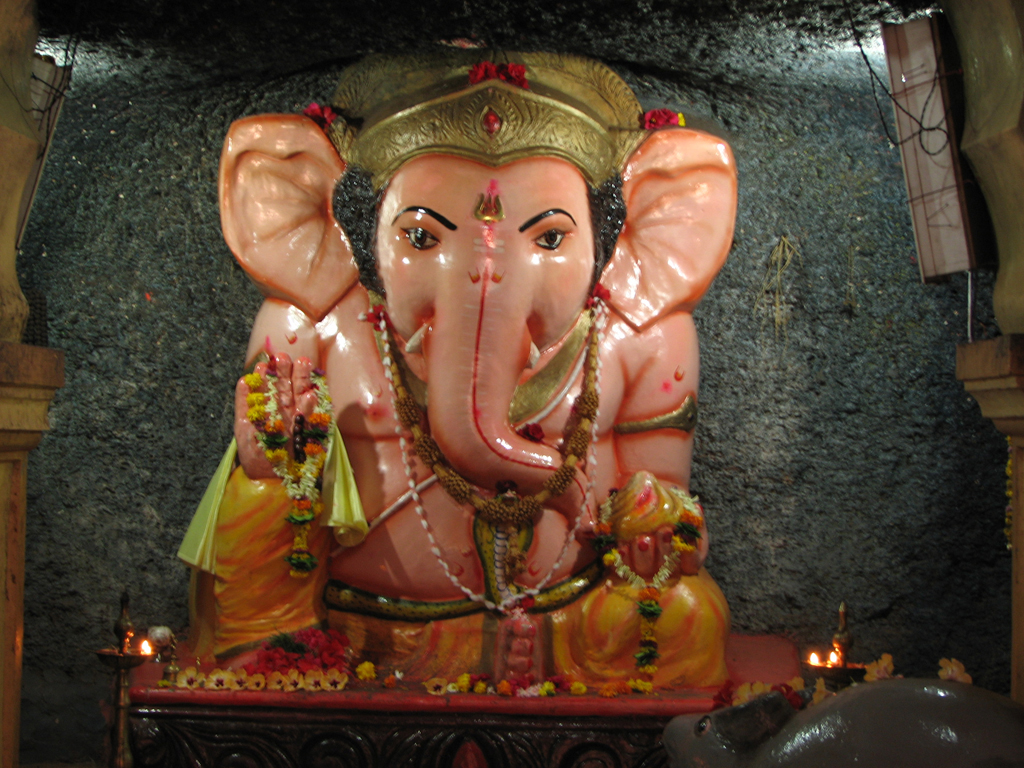
Redi is also recognized for its Ganesh temple. This temple encloses a history associated with it. The town in which this temple is situated contains manganese mines, and the Ganpati idol was found in one of the mines near Rewati port in 1976.
The idol is 6′ tall and approximately 3′ wide. It is in a sitting position. It is carved from one single black stone and dates back to the early 100s.
Redi’s very famous Ganesh Temple finds its roots in a very intuitive and interesting story. It’s believed that every person possesses some sixth sense, but only few are aware of it, and among them very few believe or listen to them. It’s really a miracle, beyond layman’s understanding.
Its foundation story is as follows: On April 18th, 1976, a truck-driver, Sadanand Nagesh Kambali, parked his truck at a particular place. This truck used to ply from Redi’s iron and mineral mines to the harbour. While sleeping there, he had a dream. In it, Lord Ganesha gave him a divine appearance and told him to dig at that very same spot, as He resided there.
Trusting his vision, he began digging and on May 1st, 1976, the villagers were astonished to witness the appearance of a two-handed idol of Lord Ganesha, carved from solid rock.
After seeking guidance from the village deity (Gram Devata), it was decided to build a temple at the very spot. A few days later, a large idol of a mouse — the traditional vehicle of Ganesha — was also excavated nearby. Both idols are remarkably graceful.
Visit this temple to admire how beautifully it is built, and feel joy from taking “Darshan” of the adorable deity.
This is a vigilant deity — ever watchful and responsive to the calls of its devotees.
Travel Themes invites you to visit the temple to see its unique idol, beautiful surroundings, and witness the enormous gatherings on Ganesh Chaturthi and Sankashti Chaturthi.
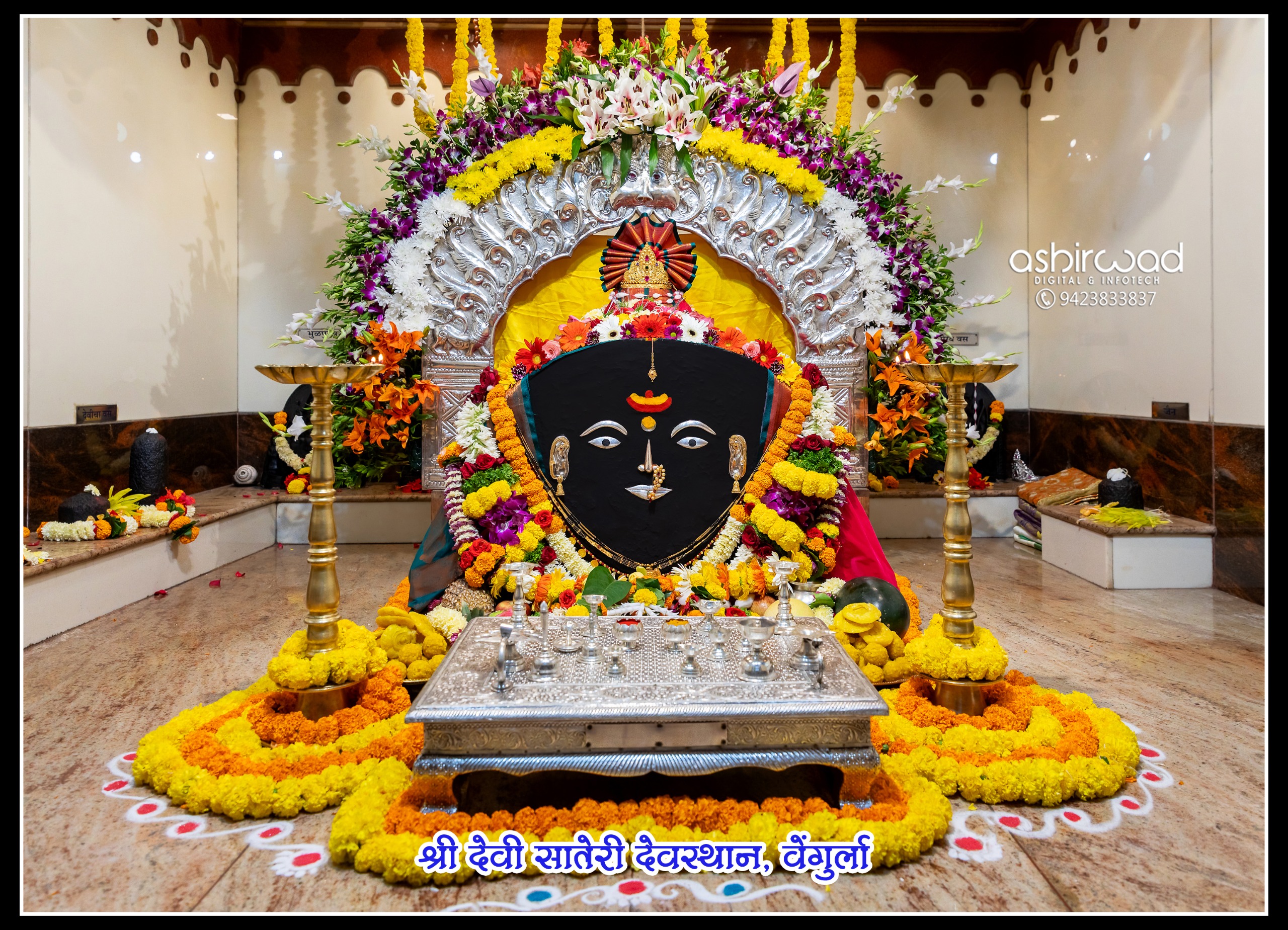
Devi Sateri Devasthan is located in a quiet, environment friendly and devoted village of Vetore. Vetore is a lush green village with mainly mango, Cashew & coconut plantation. All the festivals of Devi are celebrated with high devotion & enthusiasm.
Hundreds of years ago, when Vengurle was not in existence, a place called Ansur (situated five miles away from Vengurle) was the center of trade and commerce. Roots of Shri Sateri could be traced back to this place. Original temple of Shri Sateri at this place is known as ‘Mul Bhumikeche Mandir’. Rights of this temple are shared by Parab and Gawde families. In those days, a pious man from Parab family used to walk ten miles every day to visit and pray Shri Sateri Devi. As the years passed by and the man grew older, it became more and more difficult for the poor fellow to practice this routine. Still he maintained the prayers with the same intensity and passion.
Sri Devi was pleased to see the devotion and commitment shown by her devotee. She blessed him and promised to end his hardship by coming closer to his home. On the way back, the old man witnessed a stunning scene where a dome like structure was spontaneously rising from the ground. He realised that Shri Sateri Devi is appearing at the point and hugged that structure with extreme happiness. He asked Shri Devi to stay there and stop growing. Instantaneously the structure stopped growing. That location is nothing but today’s Shri Devi Sateri Mandir.
In the local language (Malvani which is a spicy dialect of Marathi language) VENG means a hug and URLE means remaining. That is how the place got its name as VENGURLE.
When you visit the temple, you will be welcomed by a specious premises spread over approximately one acre of land.
Entire structure is constructed using the volcanic stone abundant in Konkan region and is around 50 feet wide and 150 feet in length.
You will be impressed with the overall architecture revealing very interesting and impressive usage of ancient Hindu architecture.
A spherical, proportionate dome adds to the visual appeal of the building and so does the DIPMALA and the TULSI VRINDAVAN in front of the building.
Your search of peace of mind ultimately ends here at Devi Sateri Temple.
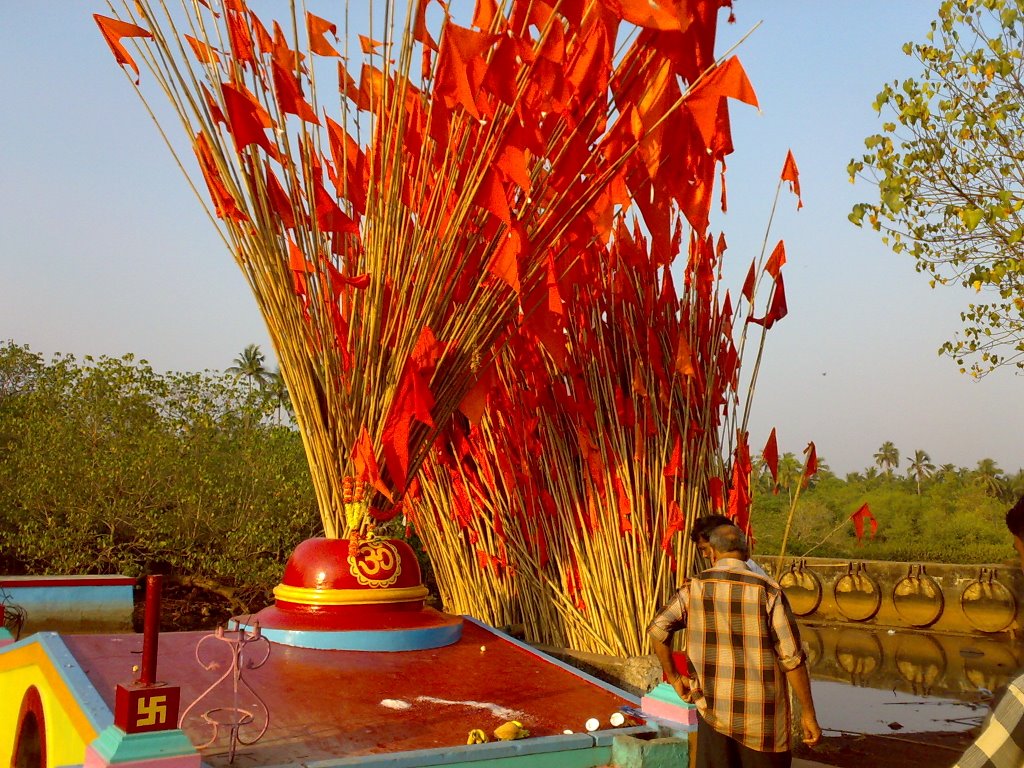
Mansishwar Temple, also known as the "Temple of a Thousand Flags", is a serene spiritual site located near the Mansi River along the Kudal–Vengurla road in Vengurla, Maharashtra.
This modest but deeply revered shrine is surrounded by natural beauty, nestled among coconut and mango trees. It draws countless visitors who come in search of blessings, peace, and a spiritual connection.
A unique tradition sets this temple apart: every time a devotee’s wish is fulfilled, they return to tie a saffron flag near the shrine as a symbol of gratitude. As a result, the temple is adorned with hundreds—sometimes thousands—of fluttering flags, creating an atmosphere of vibrant faith.
The temple itself is simple and brightly painted, without a grand structure or towering idol. Yet, it is precisely this simplicity that enhances its power. Many believe the temple has a strong spiritual energy, where prayers are heard and miracles happen quietly.
The legend surrounding this place is one of personal faith. Some locals describe feeling a divine presence or intuition while visiting the temple. Visitors are often greeted by the sound of rustling leaves, river water, and lapwings flying nearby—adding to the sacredness of the experience.
Located about 25–30 km from Goa’s Aronda–Keri bridge, Mansishwar Temple is easy to reach and welcomes visitors throughout the day. The temple is believed to be protected by the Gram Devata (village deity) and is particularly popular during festivals.
Whether you visit out of devotion, curiosity, or for quiet reflection, the Mansishwar Temple of Vengurla offers a beautiful escape into the heart of Konkan's spiritual heritage.
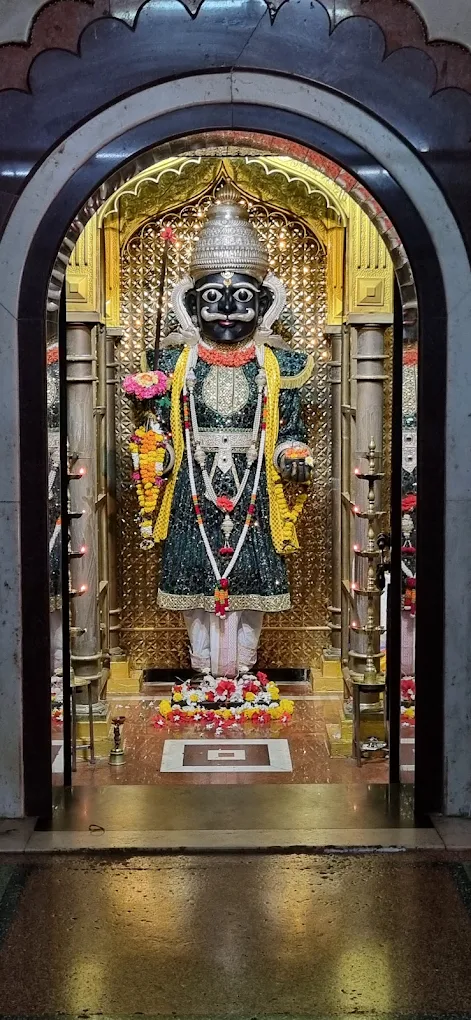
Vetoba Mandir is a sacred temple located in Aaravali village near Vengurla, in the Sindhudurg district of Maharashtra. Lord Vetoba is revered as a fierce and protective deity, widely worshipped across the Konkan region. He is considered a guardian of the village, known to punish wrongdoers and protect the innocent.
The temple holds immense spiritual significance and is deeply rooted in local traditions and folklore. Legend has it that Vetoba walks through the village at night, ensuring peace and justice. Devotees often offer a pair of black leather sandals to the deity, believing he wears them during his nightly patrol.
The temple is centuries old, and its history can be traced back to ancient times when villagers sought the blessings of Vetoba for protection and justice. Even today, people visit the temple with great devotion to resolve disputes, seek blessings, or express gratitude for answered prayers.
The temple’s architecture is modest yet spiritually powerful. Devotees light oil lamps, break coconuts, and present offerings like red cloth and oil to express their devotion.
A grand annual festival called Vetobachi Jatra is celebrated in December or January. This festival brings together thousands of devotees and includes a ceremonial procession, folk performances, and religious rituals.
Aaravali is located about 7 km from Vengurla town, and the temple is easily accessible by road. The nearest railway station is Sawantwadi Road (around 25 km away), and the Sindhudurg Airport at Chipi is roughly 20 km from the temple.
The temple complex is surrounded by lush greenery and a peaceful village atmosphere, adding to the spiritual experience. A visit to Vetoba Mandir is not just a religious journey but a cultural and emotional one that connects devotees with the soul of Konkan.
Devotees leave the temple with a sense of peace, protection, and fulfillment — believing that Vetoba Maharaj watches over them wherever they go.